

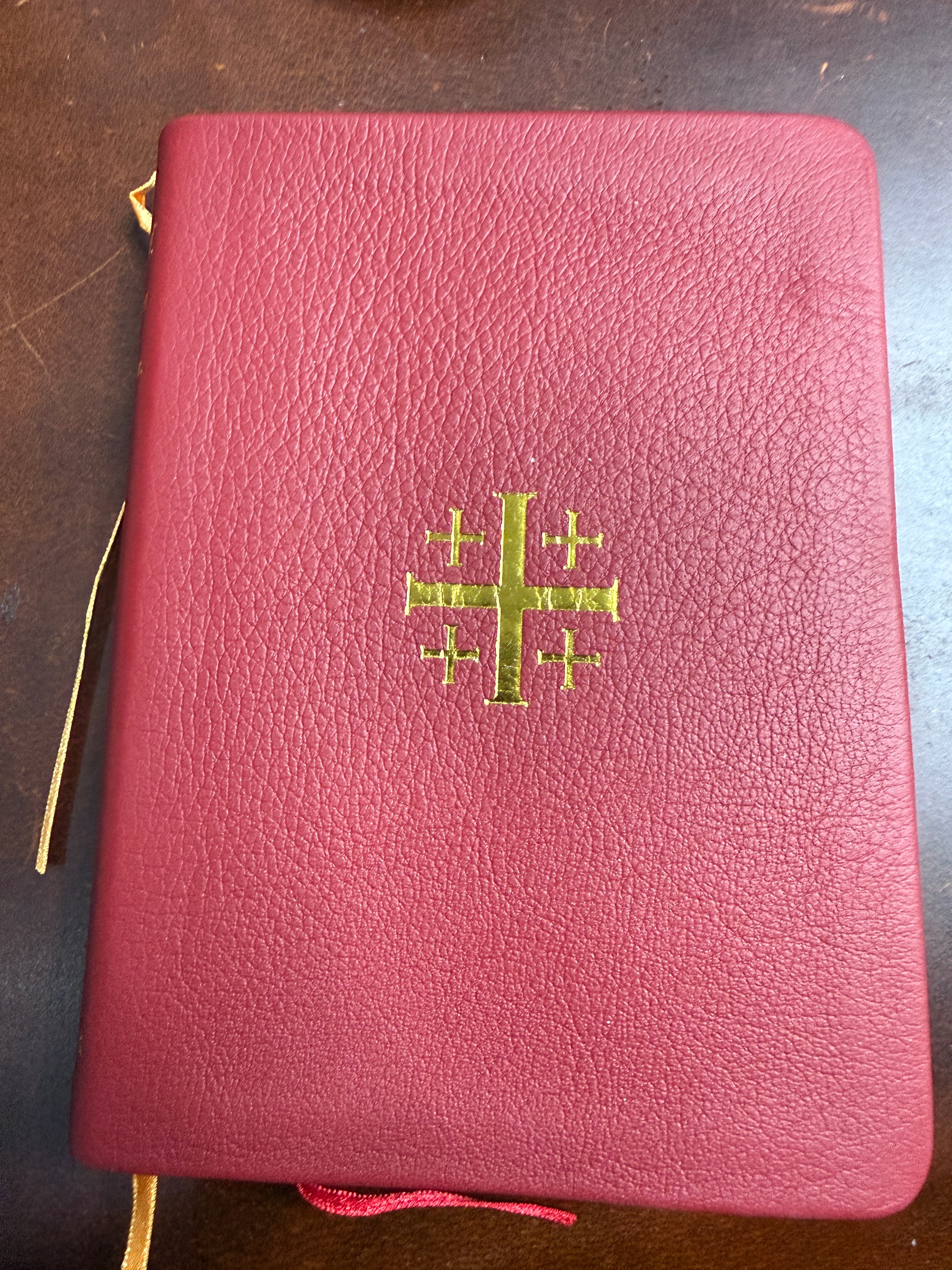
I’m six weeks into something I didn’t see coming.
Every morning, somewhere around 5:45, I sit down with a cup of coffee and a new friend - the Book of Common Prayer. I open to the Daily Office, find the date, and start reading aloud. “Lord, open our lips. And our mouth shall proclaim your praise.” I follow along with a podcast called the Daily Office Podcast, which walks through morning prayer step by step, and I read the appointed psalms and scriptures and collects right there from my office easy chair in Medical Lake.
I’m not Anglican. I’m PCA — Presbyterian Church in America, Reformed, the whole deal. I grew up in dispensational Southern Baptist churches, found my way out of that system in my twenties, landed in the Reformed tradition, and have been there since. I studied Greek in college. I teach occasionally. I’ve read more Calvin than most people would consider healthy.
So what am I doing with the Book of Common Prayer?
Here’s the thing — I think it’s teaching me how to pray again.
I come from a tradition that prizes extemporaneous prayer. You bow your head, you talk to God in your own words, you mean it. And I do mean it. But I’d noticed something over the years. Left to my own devices, my prayers had become almost entirely about me. My anxieties. My plans. My requests. I’d sit down to pray and within thirty seconds I was running through my to-do list with a “Lord” tacked on the front.
The BCP short-circuits that. When I open to morning prayer, the words are already there — and they’re pointed at God. His character. His faithfulness. His mercy. The psalms do what psalms have always done (which is everything — lament, praise, confusion, rage, trust). The collects are these impossibly compressed little prayers that somehow say in two sentences what I’d fumble around trying to say in ten minutes.
I didn’t expect it to click so fast. I thought written prayers would feel rote, performative — like reading someone else’s mail. They don’t. They feel like being handed a vocabulary I didn’t know I was missing.
My wife started on this trajectory before me. She uses a different podcast — one by the Trinity Mission — and does her own morning prayer. We didn’t coordinate this. I don’t know what got her started, but she really resonates with it.
But here’s where it gets good. At night, we do Compline together.
Compline is the last office of the day — a short evening prayer, maybe ten minutes. We lie in bed and read it aloud, trading off the versicles and responses. “The Lord Almighty grant us a peaceful night and a perfect end.” There’s a prayer of confession. There’s a psalm. There’s a moment where you commend yourself to God before sleep — “Guide us waking, O Lord, and guard us sleeping; that awake we may watch with Christ, and asleep we may rest in peace.”
We’ve been married thirty-one years. We’ve done devotionals together, read books together, prayed together in the usual free-church way — eyes closed, someone starts talking. Most of the time, it hasn’t stuck. This is different. There’s something about reading these ancient words side by side, out loud, that strips away the pressure to perform. Neither of us has to come up with the right thing to say. The prayer is already written. We just show up and pray it.
I want to be clear — this isn’t a critique of the PCA (though I wish we recited the creeds more) or of extemporaneous prayer. I’m not becoming Anglican. I still believe free prayer is vital. But I’ve found something in another tradition that’s filling a gap I didn’t fully recognize was there.
Cranmer and the compilers who came after him — they knew what they were doing. They built a prayer book that takes you outside yourself. That’s no small thing for a guy in his fifties who’s spent decades praying prayers that orbit his own life like a satellite.
Most nights now (we’re not perfect), my wife and I end the day the same way. Same words. Same commendation to the same God.
It’s only been a month. I’m not an expert on any of this. But I know what it’s done already.
It’s taught me to shut up and let the prayer pray me.
Sounds like you already have the hang of it, but you might enjoy Samuel Bray's "How to Use the Book of Common Prayer" as well. I share your experience of the BCP also.
Are you familiar with the work of Charles Taylor, particularly A Secular Age?
After becoming familiar with his work, and my desire already underway to try and understand and learn from ante-Nicene Christianity, I desired a way to put away my materialist buffered self and embrace, as the Church fathers knew naturally, the enchants cosmos.
I think the key to becoming more Christ-like is to take up residence in a cosmos where there is no Enlightenment-created false dichotomy of natural and supernatural. There is only the natural. There is nothing more natural than the creator of all good things to step into the time he created and make alterations according to his good and perfect will.
That is the reality I want to reshape my soul.
One of the tools I’ve embraced is the Book of Common Prayer. I use an app called Venite.
I’m not as disciplined as I should be but I am sticking with it and i get glimpses now and then of how my perception of reality is changing.
One of the big mistakes evangelical Christianity made was dropping liturgy.
Of If I lived near a doctrinally conservative Anglican Church, I’d be drawn to it.